
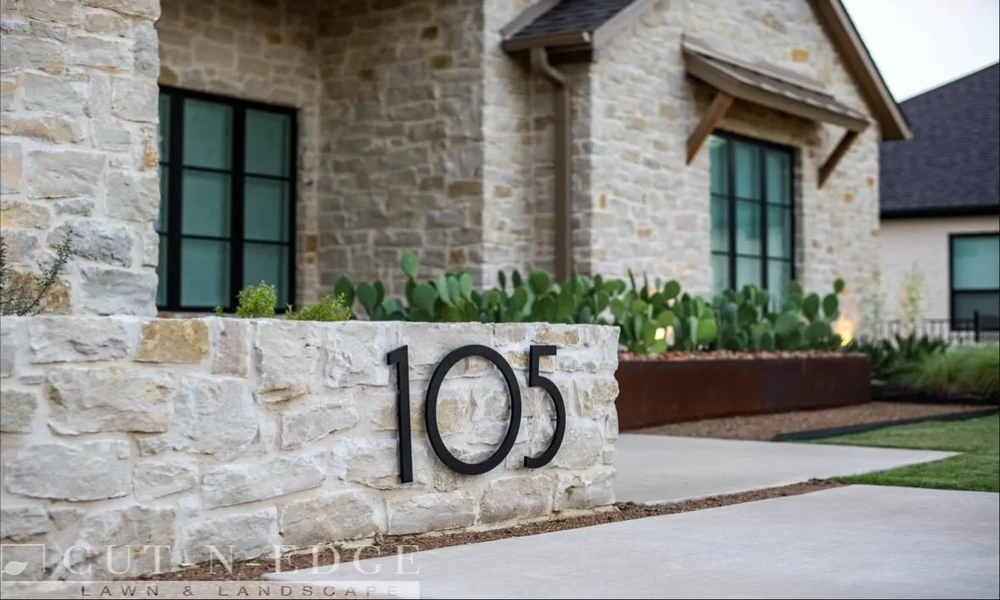
Though house numbers might be a seemingly insignificant detail, they can have a subtle effect on the overall appearance of a house. They’re usually one of the first things visitors notice and are often located near the front door, gate or porch. If the style, size and finish of the house numbers match the architecture, even a basic entrance can look finished and well assembled.
Understanding the connection between house numbers and architecture can make it easier to choose a design that feels natural on the property. The lettering, size, material, and finish should complement existing features such as the front door, siding, brickwork, or stonework. By treating house numbers as part of the overall exterior rather than an isolated detail, homeowners can create an entrance that feels balanced, practical, and visually cohesive.
Allow the Architecture to take the lead.
First, check the nature of your house. Does it feel crisp and modern, traditional and detailed, or relaxed and rustic? Your house numbers should be part of the visual story, not a decoration on its own. Perhaps sleek, simple numerals are appropriate for a modern, clean-lined home with large windows. A classic brick home will look more natural with classic lettering and some subtle decoration. A handcrafted style can lend some charm to a cottage or farmhouse exterior, while a warmer style will work on this type of exterior.
Consider the shapes and proportions
The size and shape of your numbers could be just as important as the font itself. A small number on a large wall can seem lost, and a small wall with a large number can be overwhelming. In the process of selecting a piece, take a look at the surrounding space. A tall, narrow number can complement tall doorways or windows, and wider numbers can look terrific across a wide doorway or above a garage. Proportion provides a sense of balance. You want the number to stand out from the street, but not be the show-stopper on the entire facade.
Choose Materials That Belong
The materials can have a significant impact on the house numbers. Brushed metal is crisp and contemporary, matte finishes are understated and sophisticated. Natural wood will add warmth and will complement timber doors, stone or other natural textures particularly well. Aged or bronze finishes can work perfectly with brick and traditional architectural elements for traditional properties. Dark metal numbers can lend just the right heft and gravitas to a more industrial home.
Don’t Forget Contrast
If beautiful numbers are not noticeable, they will not help. Contrast makes them easier to read from the pavement and also serves as a design element. Dark numbers on a light background, like a white wall, are a no-brainer, but there can be subtle contrast as well. For instance, a warm brass finish on a dark-toned door might catch the light beautifully, but without being flashy.
Make a cohesive entrance.
Lastly, take a broader view. Your house numbers should complement the door hardware, lighting, mailbox, exterior colours, and other elements around the door. They don’t have to be a perfect match. In fact, a little contrast can bring personality. The most important thing is that the pieces feel connected. House numbers can be a subtle but significant detail that makes a house look more complete when selected carefully to complement the overall design.