
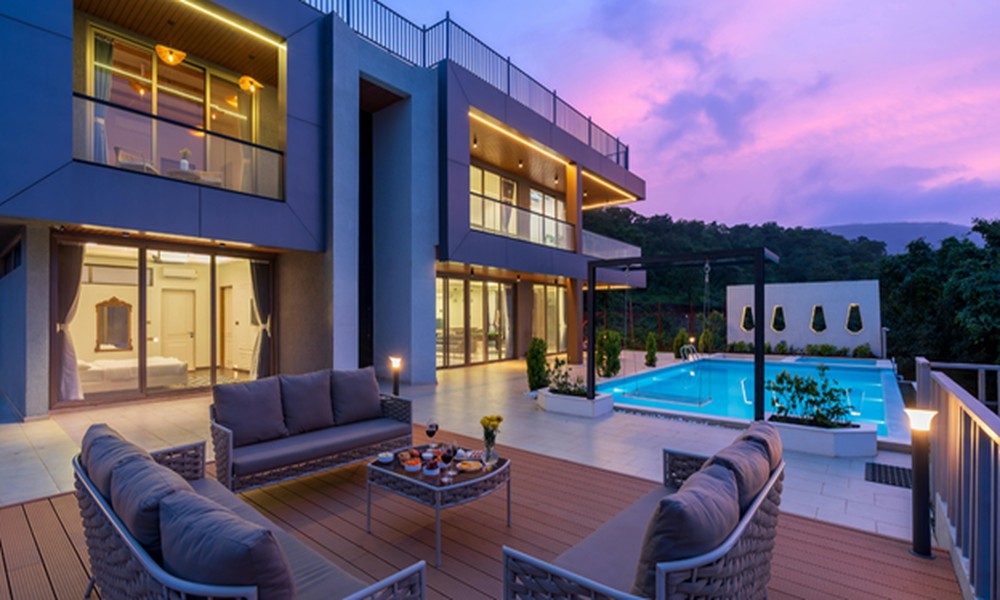
In the exclusive enclaves of Bel Air and the Hollywood Hills, the primary “amenity” isn’t found within the walls-it is the panoramic vista outside them. Whether it is a 270-degree view of the sparkling Los Angeles basin, a framed glimpse of the Hollywood Sign, or a serene look over the Stone Canyon Reservoir, the architecture’s most important job is to act as a silent, sophisticated lens.
Designing for these steep, prestigious terrains requires more than just installing large windows. It demands a specialized structural intelligence and a deep understanding of light. Here are the top six design strategies used by any premier luxury architecture firm in LA to maximize these world-class views.
1. The Art of the “Floating” Cantilever
To capture a view in the hills, you often have to go where the land does not. The most iconic homes in the Hollywood Hills utilize daring cantilevers-projecting volumes that extend out over the slope. By lifting the living spaces off the hillside and suspending them in the air, architects eliminate the visual interference of the immediate foreground.
This creates a “floating” sensation for the inhabitant, where the floor seems to terminate directly into the sky. Beyond the aesthetic drama, cantilevers are a pragmatic solution to “unbuildable” steep lots, allowing for an expansive footprint while minimizing the disruption to the natural topography below.
2. Glass-to-Glass Corner Joins
Traditional window frames, no matter how thin, act as visual “stutter points” that remind the eye of the barrier between inside and out. To achieve a truly uninterrupted panoramic experience, modern luxury design utilizes structural glass-to-glass corners.
By removing the corner post and joining two massive panes of glazing with high-strength transparent silicone, the corner of the room effectively disappears. This strategy is particularly effective in Bel Air estates, where a home might be positioned to capture both the sunrise over the city and the sunset over the Pacific. The result is a seamless “cinematic” wrap of the horizon.
3. Axial Orientation and “The Reveal”
Great architecture is about the choreography of movement. Rather than showing the entire view the moment a guest walks through the front door, sophisticated design uses axial orientation to create a “reveal.”
An architect might design a long, compressed entry gallery lined with textured stone or dark wood, leading toward a single, perfectly framed focal point. As you move through the house, the space suddenly opens into a double-height great wall of glass. This contrast between enclosure and expansion makes the eventual view feel even more expansive and impactful-a technique known as “compress and release.”
4. Pocketing Multi-Slide Door Systems
In the temperate climate of Southern California, a view is best enjoyed when the physical barrier of the wall is removed entirely. The rise of automated, multi-slide pocketing doors has revolutionized hillside living. These massive glass panels-sometimes reaching 12 feet in height-slide completely into hidden wall pockets.
When fully retracted, the living room and the terrace become a single, continuous floor plate. This eliminates the “threshold” and allows the city breeze and the sound of the canyon to become part of the interior atmosphere. It transforms the home from a viewing platform into an open-air pavilion.
5. Negative Edge Reflection Pools
A negative edge (or infinity) pool is a classic staple of Hollywood Hills architecture for a functional reason: it merges the water with the sky. By placing an infinity pool at the very edge of a terrace, the water’s surface creates a mirror that reflects the clouds during the day and the city lights at night.
This horizontal plane of water acts as a visual bridge, leading the eye from the interior floor, across the pool, and directly into the distant view. It creates a sense of infinite space, making a standard-sized lot feel like a sprawling estate that encompasses the entire basin.
6. Sculptural Overhangs for Glare Control
The “iconic view” in LA usually faces south or west, meaning the afternoon sun can be punishing. Maximizing a view isn’t just about glass; it’s about managing the light that comes through it. High-end designs incorporate deep, sculptural roof overhangs or “brise-soleil” elements.
These overhangs are engineered based on the solar path of the specific site. They provide necessary shade to prevent the home from overheating and to eliminate glare on interior surfaces, which can “wash out” the view. By controlling the light, the architect ensures that the view remains crisp, vibrant, and comfortable to look at from dawn until the “blue hour” of dusk.
Architecture in the hills of Los Angeles is an exercise in balance. It requires the technical bravery to build on a precipice and the artistic restraint to let the landscape lead the conversation. By utilizing these six strategies, a home becomes more than just a place to live-it becomes a permanent front-row seat to the theater of the city.
