
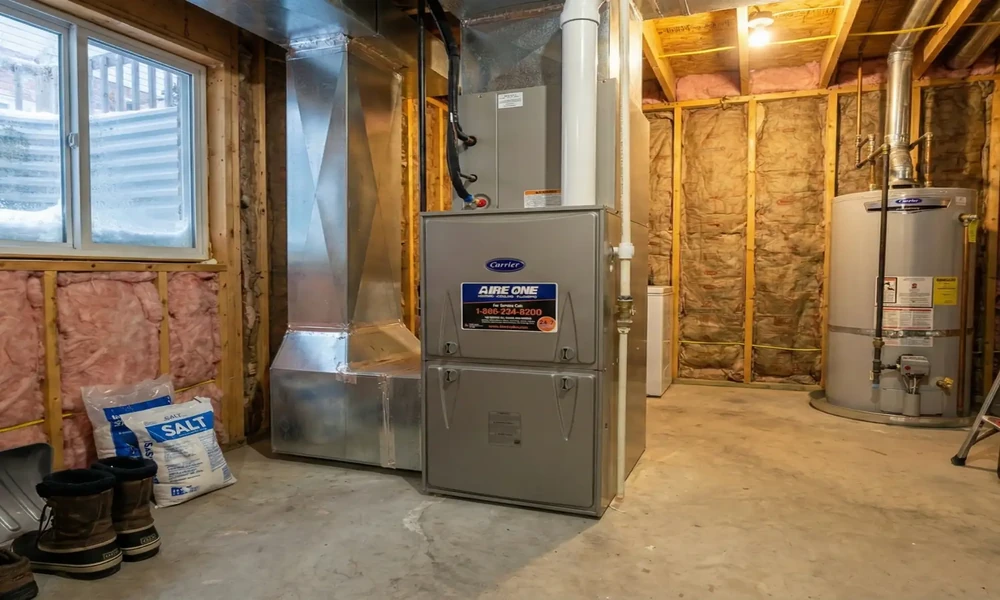
You set the thermostat to a comfortable number, the furnace hums along, and the living room feels perfect. Then you walk into the upstairs bedroom or the basement office and it feels like a different climate. Uneven heating is one of the most common comfort complaints in homes with forced air systems, and it rarely has a single cause. In Utah, where winter nights drop well below freezing and many homes span two floors plus a basement, the gap between the warmest and coldest room can get uncomfortable fast.
The good news is that cold rooms are usually a symptom of something specific. Once you know where to look, most of the causes can be found and fixed without replacing the whole system.
One Thermostat Cannot Speak for the Whole House
A thermostat measures temperature in exactly one place, usually a hallway or living area on the main floor. When that spot reaches the target, the furnace shuts off, even if a bedroom at the far end of the house is still several degrees behind. The system is doing what it was told. It simply has no information about the rest of your home.
Physics adds to the problem. Warm air rises, so upper floors tend to hold heat while basements and ground level rooms lose it faster. A home that is balanced perfectly on a mild autumn day can feel lopsided once a hard freeze arrives, because the temperature difference between inside and outside is much larger and every weakness in the system shows up.
If you have already tried closing doors and adjusting vents without lasting results, it is worth having a professional look at the system. A local team like Heat Your Heart Out can measure airflow room by room, which takes the guesswork out of a problem that homeowners often spend whole winters chasing.
Leaky Ducts: The Hidden Heat Thief
Ducts are the highways that carry heated air from the furnace to every room, and they are often hidden in attics, crawl spaces, and unfinished basements. Over the years, joints loosen, seams crack, and connections pull apart. Heat escapes into spaces nobody lives in, and the rooms at the end of the line get whatever is left.
According to ENERGY STAR, a program run by the U.S. Environmental Protection Agency, a typical house loses roughly 20 to 30 percent of the air moving through its duct system to leaks, holes, and poor connections. The same resource lists common warning signs, including rooms that are difficult to heat, high utility bills in both winter and summer, ducts running through attics or garages, and flexible ducts that are tangled or kinked. You can read the full explanation in the ENERGY STAR guidance on duct sealing.
That page also notes that mastic sealant or metal tape works for accessible leaks, while ordinary duct tape does not hold up over time. Ducts buried inside walls and ceilings are harder to reach, which is one reason many homeowners hand the job to a contractor.
Quick Checks You Can Do Today
Before assuming something major is wrong, run through the simple possibilities. They cost nothing and solve more problems than people expect.
- Walk the house and confirm every supply vent is open and not covered by a rug, curtain, or couch.
- Replace the furnace filter if it looks gray or clogged. A restricted filter reduces airflow to the entire house.
- Check that return air grilles are clear. Heat needs a path back to the furnace, and a blocked return starves the system.
- Look at doors. A bedroom with the door shut and no return path can become pressurized and resist incoming warm air.
- Feel the air coming out of a cold room vent. Weak airflow points to a duct problem, while cool air points to a different issue entirely.
Airflow Balance and System Sizing
Even healthy ducts can deliver uneven results if the airflow was never balanced. Dampers inside the ductwork let a technician direct more air to distant rooms and less to the ones closest to the furnace. Many homes were never adjusted after installation, or the settings were changed during a remodel and never revisited.
Sizing matters too. A furnace that is too large heats the thermostat area quickly, shuts off, and repeats the cycle without ever pushing enough warm air to remote rooms. A furnace that is too small runs constantly and still cannot keep up on the coldest days. Neither problem is obvious from the outside, but a proper load calculation reveals it.
The Building Itself Plays a Part
Sometimes the heating system is fine and the room is the real culprit. Thin insulation above a bonus room, a drafty window, a poorly sealed rim joist in the basement, or an uninsulated wall facing the prevailing wind can all drain heat faster than the vents can supply it. Adding weatherstripping, caulking gaps, and checking attic insulation depth are modest projects that make every other fix work better.
Rooms over garages are a classic example. They sit above an unheated space, often with minimal insulation in the floor, so they run cold no matter how much air the ducts deliver.
When to Bring in a Professional
If the quick checks do not change anything, a professional visit is the next step. A thorough inspection should include looking at the full duct layout, measuring airflow at each register, checking static pressure at the blower, and confirming the furnace is sized correctly for the home. You should leave with a clear explanation of what is happening and a ranked list of options, from low cost sealing and balancing to larger changes like adding a return duct or a zoning system.
Be cautious of anyone who recommends replacing the furnace without measuring anything first. Equipment is rarely the first thing to fix when only certain rooms are cold.
Bringing the Whole House Up to Temperature
A cold room is information, not just an annoyance. It points to a leak, a blockage, an imbalance, or a weakness in the building itself, and each of those has a practical fix. Start with the free checks, look closely at your ductwork, and do not overlook insulation and air sealing. If the problem survives all of that, a professional airflow assessment will identify the cause rather than treating symptoms.
A home that heats evenly is more comfortable, and because less heat is wasted, it usually costs less to run. Solving the cold room problem this season means the rest of winter can be spent actually enjoying the warmth you are paying for.