
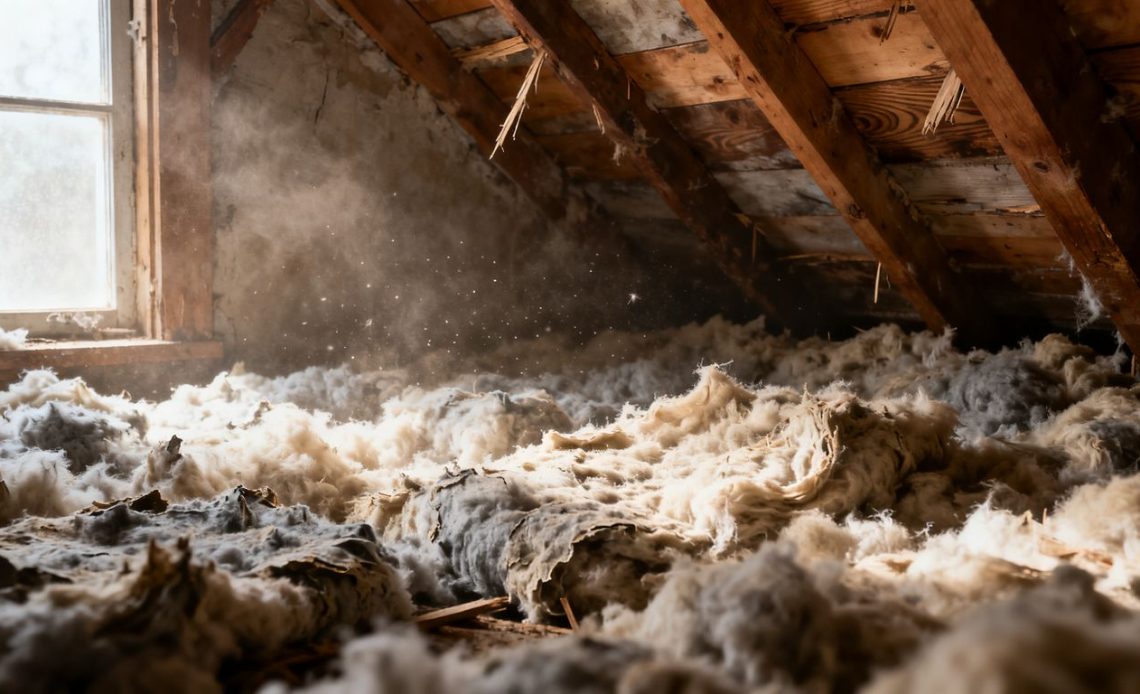
Asbestos refers to a group of six naturally occurring mineral fibers historically valued for their durability, heat resistance, and insulating capabilities. While these attributes made them common in various building materials, the physical structure of the fibers poses significant dangers when they become airborne. Understanding the nature of these microscopic particles is the first step in assessing potential household risks.
Understanding asbestos fibers and physical properties
Asbestos minerals are defined by their fibrous habit, meaning they easily separate into thin, needle-like fibers when disturbed. These fibers are incredibly strong and resistant to chemical and heat degradation, which historically made them useful for industrial applications. However, their physical geometry is exactly what makes them hazardous, as they are capable of penetrating deep into the delicate tissues of the respiratory system.
Historical use of asbestos in residential construction
For most of the 20th century, asbestos was widely incorporated into home building products due to its fire-retardant qualities. Common applications included attic insulation, vinyl floor tiles, textured “popcorn” ceilings, and roofing shingles. As detailed in the asbestos exposure and cancer resources, these materials remain in many older structures, presenting a hazard only if they are damaged or aging.
Routes of environmental exposure within the home
Exposure occurs when materials containing asbestos break down and release fibers into the air. In a modern residential setting, homeowners may inadvertently disturb old materials during renovations or general maintenance tasks. Following professional asbestos-related lung cancer advice becomes vital, as inhaled fibers linger in the environment long after a disturbance has ceased.
Identifying potential asbestos in residential settings
Identifying asbestos can be difficult because the fibers are invisible to the naked eye and are often encapsulated within other construction materials. Most homeowners are surprised to learn that materials such as floor adhesive or pipe insulation might harbor these minerals. Maintaining a cautious approach during any home repair project is consistently recommended by public health experts.
Common home materials likely to contain asbestos
Certain items are statistically more likely to contain asbestos, particularly those installed prior to the mid-1980s. When managing a home, consider the following items as potential sources:
- Thermal insulation on pipes and boilers
- Loose-fill attic insulation
- Cement-based sheet materials used for siding
- Vinyl floor tiles and their mastic adhesives
- Textured paints and ceiling coatings
Careful monitoring of these specific components can help mitigate unexpected hazards.
Distinguishing between friable and non-friable materials
The most important distinction to make regarding suspect materials is their condition, specifically whether they are friable or non-friable. Friable materials can be crumbled or reduced to powder by hand pressure, which significantly increases the risk of fiber release. Non-friable materials, such as bonded cement boards, are safer unless they are sanded, drilled, or shattered.
Why visual inspection is insufficient for definitive detection
Visual identification is dangerous because it leads to a false sense of security. Many materials that contain high concentrations of asbestos look identical to those that do not. Furthermore, the presence of asbestos is based on chemical composition rather than the age or color of the material, making laboratory confirmation a mandatory step for identifying hazards before any work begins.
Importance of professional laboratory analysis
Definitive detection requires sampling the material and analyzing it through polarized light microscopy or transmission electron microscopy. These professional tests determine the type and percentage of asbestos present, which dictates the necessary precautions. Attempting to manage or identify these materials without formal verification often leads to unnecessary exposure.
The biological link between asbestos exposure and lung cancer
Once inhaled, asbestos fibers interact with the lung environment in complex and destructive ways. The biological process that leads to severe illness is often subtle, occurring over many years as the body struggles to eliminate foreign substances. The persistence of these fibers within the body is the primary driver of later cellular damage.
How inhaled microscopic fibers settle in lung tissue
When airborne fibers reach the lungs, their shape allows them to pass through the initial defensive barriers. Many of these fibers become physically trapped in the smaller airways or within the pleural lining of the lungs. Because the body cannot naturally break down these mineral threads, they remain in place for decades, continuously irritating the surrounding tissue.
Chronic inflammation and secondary cellular mutations
The ongoing presence of fibers triggers a continuous cycle of inflammation as the immune system attempts to clear the intrusion. This chronic state of stress causes the turnover of cells to become erratic, leading to DNA damage that can result in cancerous mutations. As explained in asbestos and lung cancer, this inflammatory mechanism is a primary driver in the development of both carcinomas and other related diseases.
The role of the lymphatic system in fiber transport
Fiber transport often involves the lymphatic system, which attempts to drain debris from lung tissue. During this process, fibers may be deposited in the pleura, the membrane that prevents friction between the lungs and the chest wall. This accumulation can lead to scarring and structural changes, creating the conditions for asbestos-related complications to emerge.
The latency period between initial exposure and disease onset
A hallmark of asbestos-related lung cancer is the lengthy latency period between exposure and diagnosis. It is common for individuals to remain symptom-free for fifteen to forty years following their first inhalation. This delay often masks the connection to earlier exposures, making early clinical history an essential component of any patient assessment.
Factors influencing the risk of asbestos-related disease
Not every individual exposed to asbestos will eventually develop lung cancer, as several variables determine the final health outcome. Understanding these risk factors helps individuals interpret their history and prioritize appropriate health screenings. The cumulative exposure to fibers is widely regarded as the most significant factor in determining the risk of disease progression.
The critical importance of cumulative exposure dose
The risk of developing lung cancer follows a dose-response relationship, meaning that higher concentration and longer duration of exposure correlate with higher risk. Even low levels of exposure are not entirely without risk, but the probability of disease increases significantly as the lifetime burden of inhaled fibers mounts.
Synergistic effects of smoking and asbestos exposure
The interaction between smoking and asbestos is particularly critical for lung health. Studies confirm that asbestos exposure and tobacco smoke trigger an additive to multiplicative increase in risk for lung cancer. For smokers who have also encountered asbestos, the likelihood of developing malignancy is exponentially higher than it is for either factor alone.
Individual biological susceptibility and risk variations
Beyond external factors, genetics and individual physiology play a role in how a person responds to fiber inhalation. Some individuals may possess higher resilience in their inflammatory or immune response pathways, while others may show increased sensitivity. These variations highlight why medical surveillance is recommended for those with documented or suspected histories of exposure.
Safe management and remediation strategies for homeowners
Homeowners who discover or suspect asbestos should prioritize containment over removal whenever possible. Engaging in unmonitored home renovations puts residents and contractors at risk of breathing in toxic dust. Following standard asbestos exposure risks is essential to ensure that materials remain undisturbed.
Risks associated with DIY home renovation projects
Many common home improvements accidentally release asbestos fibers. Activities like removing old floor tiles, sanding down drywall compound, or disturbing insulation all aerosolize particles. Treating an home as a standard construction site without professional guidance ignores the specialized containment protocols required to capture microscopic debris.
Conducting a professional site assessment
Before initiating any remodeling, a professional site assessment can provide a clear map of where hazardous materials exist. Certified inspectors use specialized equipment to assess the condition of materials and provide a roadmap for safe management. This assessment avoids the risk of guesswork and helps in planning effective maintenance.
Working with licensed asbestos abatement professionals
When removal is necessary, it must be performed by licensed professionals who specialize in asbestos mitigation. These teams employ strict control measures, such as negative air machines and sealed containment zones, to prevent fibers from migrating into other rooms. Professional abatement is the only way to ensure the work meets local regulatory requirements.
Strategies for safely managing legacy building materials
For many homeowners, the best strategy is to leave undamaged materials in place. Coating surfaces with a specialized sealant, or encapsulation, can prevent fibers from becoming airborne during daily living. When materials are maintained in good condition, they pose little risk to occupants, provided they are monitored regularly for signs of wear.
Recognizing symptoms and seeking medical guidance
Detecting symptoms of asbestos-related injury often requires vigilance, as the signs are easily mistaken for common respiratory issues. Residents with a history of living in older, potentially contaminated homes should keep a timeline of their exposure to share with healthcare providers. Accessing a clinical and pathological analysis can provide researchers and physicians with better context for managing specific patient cases.
Identifying early-stage respiratory warning signs
Early signs often begin as subtle changes in breathing, such as a persistent cough or a tightness in the chest. These symptoms can be easily dismissed, but a shortness of breath that worsens over time is a significant indicator. Consulting a physician when any respiratory pattern changes is a necessary precaution.
Diagnostic imaging and clinical tests for asbestos-related conditions
Physicians may use chest X-rays or CT scans to identify scarring or the presence of tumors in the lungs or pleural space. These imaging tools are effective at identifying the telltale markers of fiber-related damage, such as pleural plaques. Clinical lung function tests may also be used to determine the impact on respiratory capacity.
Proactive health surveillance for long-term residents
Individuals who have lived for many years in homes containing suspected asbestos should establish a relationship with a physician who is aware of their residential history. Periodic check-ups allow for the tracking of any physiological changes over time. Staying proactive does not guarantee immunity from disease, but it allows for intervention at the earliest possible stage.
When to consult with an occupational or environmental medicine specialist
For residents with definitive evidence of contact with large amounts of asbestos, an environmental medicine specialist provides the most accurate clinical guidance. These experts specialize in the intersection of environmental hazards and systemic health. They can coordinate sophisticated testing and help differentiate between non-specific respiratory conditions and those directly tied to historic fiber exposure.